S-PLEX MSD mesoscale electrochemiluminescence discovery multiplex polyplex singleplex immuno assay PK PD ADA aNB Biomarker service S-PLEX

MSD by chimera biotec GmbH

Find your S-PLEX MSD
mesoscale electrochemiluminescence discovery service for your study

Chimera biotec offers full S-PLEX MSD™ testing service for all your bioanalytical needs. We use “Ready to use” off-the-shelf kits which are available for various biomarkers or develop an highly sensitive S-PLEX MSD™ assay based on your specific requirements. 

MSD Assay MESO QuickPlex SQ 120MM S-PLEX V-PLEX U- PLEX R-PLEX

MSD™ S-Plex under GLP & GCP and non-regulated – Meso Scale Discovery

We offer MSD™ S-PLEX immunoassays under GLP, GCP and non-regulated.


MSD S-PLEX® assays are designed to deliver fast, highly sensitive biomarker detection from minimal sample volumes. Leveraging advanced S-PLEX technology, these assays enable researchers to accurately measure extremely low concentrations of analytes that often cannot be detected using conventional immunoassay platforms. This enhanced sensitivity also helps preserve valuable sample material, making S-PLEX an ideal solution when biological specimens are limited.


Key Benefits of MSD S-PLEX Assays


  • Exceptional Sensitivity
    Detect proteins at femtogram-per-milliliter (fg/mL) levels, enabling the reliable measurement of low-abundance biomarkers while minimizing sample consumption.

  • Outstanding Specificity
    Generate accurate and dependable results by selectively detecting target analytes with minimal interference from cross-reactivity or background signals.

  • Multiplex Capability
    Analyze multiple biomarkers simultaneously from a single sample, reducing sample requirements and increasing the amount of actionable data obtained from each experiment.

For Research Use Only. Not for use in diagnostic procedures.

Read More

MSD™
Multi- Singleplex

S-PLEX | Technology

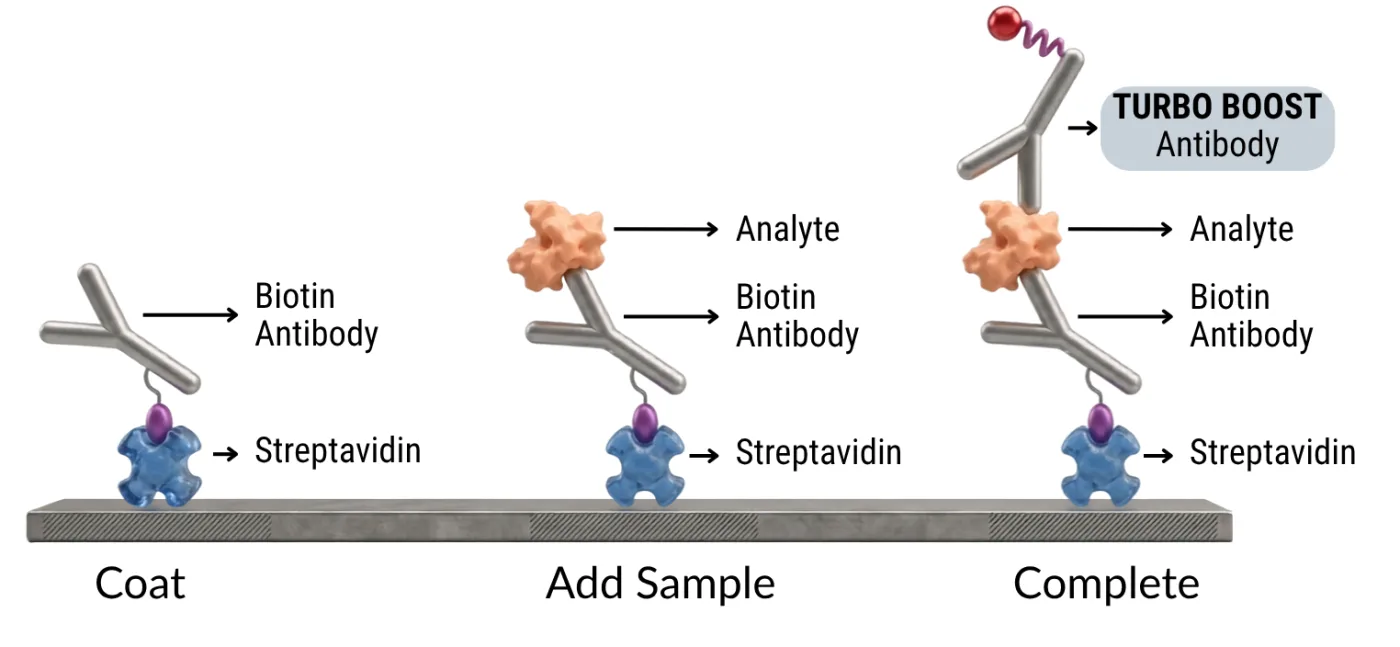
MSD S-Plex Turbotag Assambly

S-PLEX® Technology

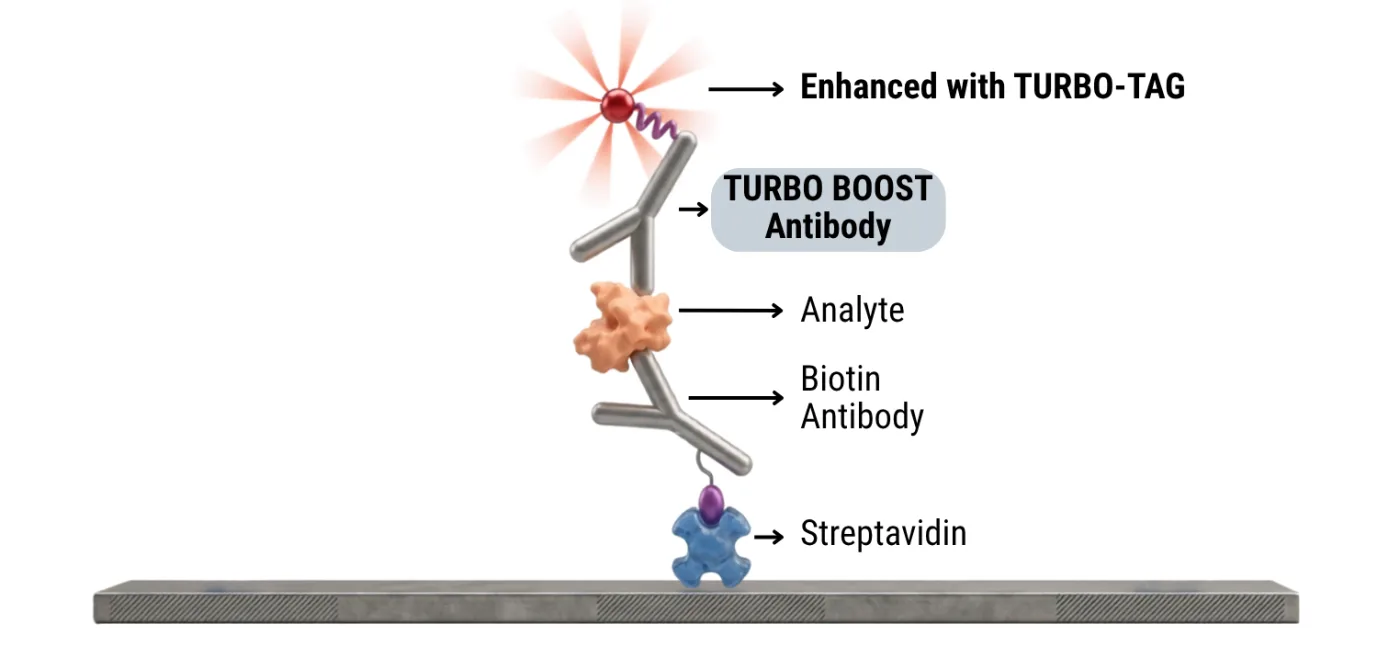
The exceptional sensitivity of S-PLEX® technology is achieved through a proprietary signal amplification strategy. Central to this approach is the combination of the TURBO-BOOST® label on the detection antibody and the TURBO-TAG® molecule, which together generate significantly stronger signals than traditional SULFO-TAG®-based detection systems.

Despite its enhanced performance, the S-PLEX workflow requires only minor adjustments to standard MSD assay protocols. The process consists of three straightforward stages that deliver outstanding sensitivity while maintaining excellent assay specificity.

1. Assemble

The assay begins with the formation of the immunoassay complex using a detection antibody labeled with TURBO-BOOST®. Additional S-PLEX reagents are incorporated during this stage to minimize background signals and improve overall assay performance.

2. Enhance

In the enhancement step, the TURBO-BOOST® label is activated and combined with TURBO-TAG®, a highly efficient electrochemiluminescent label. TURBO-TAG® selectively binds to the enhanced TURBO-BOOST® molecules, creating a powerful signal amplification mechanism that enables the detection of extremely low-abundance analytes.

3. Read

The final stage involves the addition of MSD GOLD™ Read Buffer followed by analysis on an MSD instrument. When an electrical voltage is applied to the plate electrodes, the captured TURBO-TAG® labels emit light, producing a measurable electrochemiluminescent signal that is directly proportional to the amount of target analyte present in the sample.

Representative S-PLEX Assay Data

The data below demonstrate the performance capabilities of S-PLEX assays, highlighting their ability to provide highly sensitive and reliable quantification of low-level biomarkers. 

Contact

MSD S-PLEX facts

12

References

30

Kit based assays

Sandwich immunoassay I (Free drug target)
Sandwich immunoassay II (Total drug)
Sandwich immunoassay III (Bound drug)
Bridging immunoassay I (Free Drug)
Bridging immunoassay II (ADA)
Neutralization assay
Hybrid immunoassay

Sulfo-Tag®

Booster Pack®

S-PLEX®

Contact us now for free

    Key Advantages and Characteristics of S-PLEX Pharmacokinetic

    (PK) Assays

    1. Ultra-Sensitive Detection in the Femtogram Range (fg/mL)

    The core advantage of S-PLEX in pharmacokinetic studies is its significant increase in sensitivity compared to conventional ELISAs or standard electrochemiluminescence (ECL) assays:

    • Lower Limits of Quantitation (LLOQ): S-PLEX achieves detection limits down to the fg/mL level (rather than pg/mL).

    • Tracking Low Drug Concentrations: In PK analytics, this allows researchers to measure biotherapeutics (e.g., monoclonal antibodies, recombinant proteins) long after administration (terminal elimination phase) or at extremely low doses (e.g., microdosing studies or highly potent therapeutics).

    2. Assay Conversion Capability

    Posters on the site (such as the AAPS 2019 presentation) highlight S-PLEX as an adaptable platform:

    • Seamless Migration: Standard immunoassays (e.g., existing MSD V-PLEX assays or ELISA antibody pairs) can be converted to the S-PLEX format, enhancing sensitivity by 10- to 100-fold without requiring a complete redesign of the antibody reagents.

    3. Reduced Sample Volume & High Matrix Dilution

    • Mitigating Matrix Interference: Due to the ultra-high sensitivity, biological samples can be significantly diluted (High Minimum Required Dilution – MRD).

    • Interference Reduction: High dilution minimizes matrix effects caused by serum/plasma components (such as endogenous proteins or soluble receptors).

    • Sample Conservation: This is especially advantageous for preclinical PK studies (e.g., in rodent models) where available sample volumes are severely limited.

    4. Broad Dynamic Range

    • Despite their focus on sub-picogram sensitivity, S-PLEX PK assays maintain a wide linear dynamic range spanning multiple logs.

    • This enables the quantification of both peak concentrations (Cmax, shortly after dosing) and trough levels within the same assay setup.

    Pk pharmacokinetic pk research assays • electrochemiluminescence MSD S-PLEX

    MSD™ S-PLEX kit-based immunoassay services

    Analyte
    (Human)
    Lower Limit of Detection (LLOD)
    (fg/mL)
    Lower Limit of Quantitation (LLOQ)
    (fg/mL)
    Upper Limit of Quantitation (ULOQ)
    (fg/mL)
    CTLA-4 32 130 170,000
    Eotaxin-3 59 141 266,000
    G-CSF 44 120 410,000
    GFAP 330 990 2,300,000
    GM-CSF 1.9 4.4 21,000
    IFN-α2a 4.9 29 52,000
    IFN-β 17 64 81,000
    IFN-γ 5.3 16 15,000
    IL-1β 19 98 70,000
    IL-2 7.3 21 30,000
    IL-3 4.6 21 17,000
    IL-4 0.54 4.9 3,300
    IL-5 2.02 5.9 19,000
    IL-6 1.1 1.3 4,400
    IL-9 8.6 39 68,000
    IL-10 1.4 9.8 12,000
    IL-12p70 2.3 6.2 18,000
    IL-13 9.1 24 53,000
    IL-17A 13 60 140,000
    IL-22 2.2 7.6 24,000
    Neurofilament L 1,700 8,480 1,400,000
    SARS-CoV-2 N 62 172 650,000
    SARS-CoV-2 Spike 95 350 260,000
    Tau (pT181) 77 460 990,000
    Tau (pT217) 880 5,900 2,400,000
    Tau (pT231) 3,100 15,000 15,000,000
    Tau (total) 12 43 90,000
    TNF-α 6.8 12 42,000
    TNF-β 3.3 11 16,000
    TSLP 9.1 34 49,000
    Ask a Scientist
    biomarker msd S-PLEX Assay service

    Key Advantages and Characteristics of S-PLEX

    Biomarker Assays

    1. Detection of Low-Abundance Biomarkers in Peripheral Fluids

    The defining feature of S-PLEX in biomarker research is enabling the measurement of trace protein markers in accessible fluids like blood, serum, and plasma:

    • Sub-Picogram Sensitivity: Reaches LLOQs down to single-digit femtogram levels (fg/mL), unlocking proteins that were previously undetectable without invasive sampling.

    • Blood-Based Biomarkers for Neurology: Allows quantification of central nervous system (CNS) markers directly in blood plasma (e.g., p-Tau181, p-Tau217, NfL, TDP-43), reducing the reliance on cerebrospinal fluid (CSF) collection.

    2. High-Throughput Multiplexing Capabilities

    • Simultaneous Quantification: S-PLEX panels allow for the simultaneous measurement of multiple low-abundance biomarkers (such as cytokine or neuroinjury panels) from a single sample well.

    • Cross-Reactivity Control: Advanced assay design ensures minimal antibody cross-talk, preserving high specificity across complex biological matrices.

    3. Early Disease Detection and Longitudinal Monitoring

    • Pre-Symptomatic Biomarkers: By capturing tiny fluctuations in baseline protein levels, S-PLEX assays aid in identifying subtle physiological changes long before clinical disease onset (e.g., early Alzheimer’s disease pathology or subclinical inflammation).

    • Treatment Response & Monitoring: Enables fine-grained tracking of pharmacodynamic (PD) biomarker responses over time during clinical trials.

    4. Sample Conservation in Precious Clinical Cohorts

    • Minimal Sample Input: Requires very low sample volumes (often as little as 25,mu L per assay), making it suitable for pediatric samples, rodent models, or limited biobank repositories.

    • Reduced Matrix Interference: High dilution tolerance ensures consistent target recovery across diverse sample types (plasma, serum, CSF, cell culture supernatants).

    Splex Msd Rquest offer Assay Service

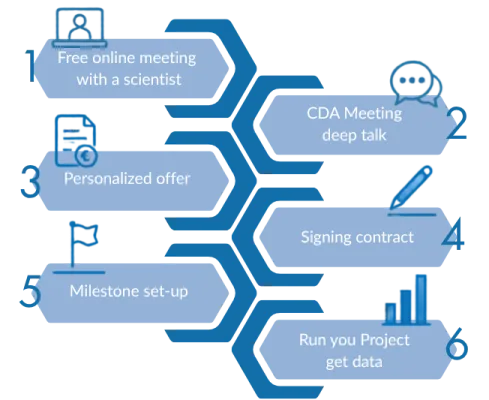
    MSD S-PLEX Assay Service 

    Tailored to your study requirements

    • Free online meeting with a scientist
    • CDA Meeting
    • Offer 
    • Contract
    • Milestone set-up

    © 2026 • chimera biotec GmbH